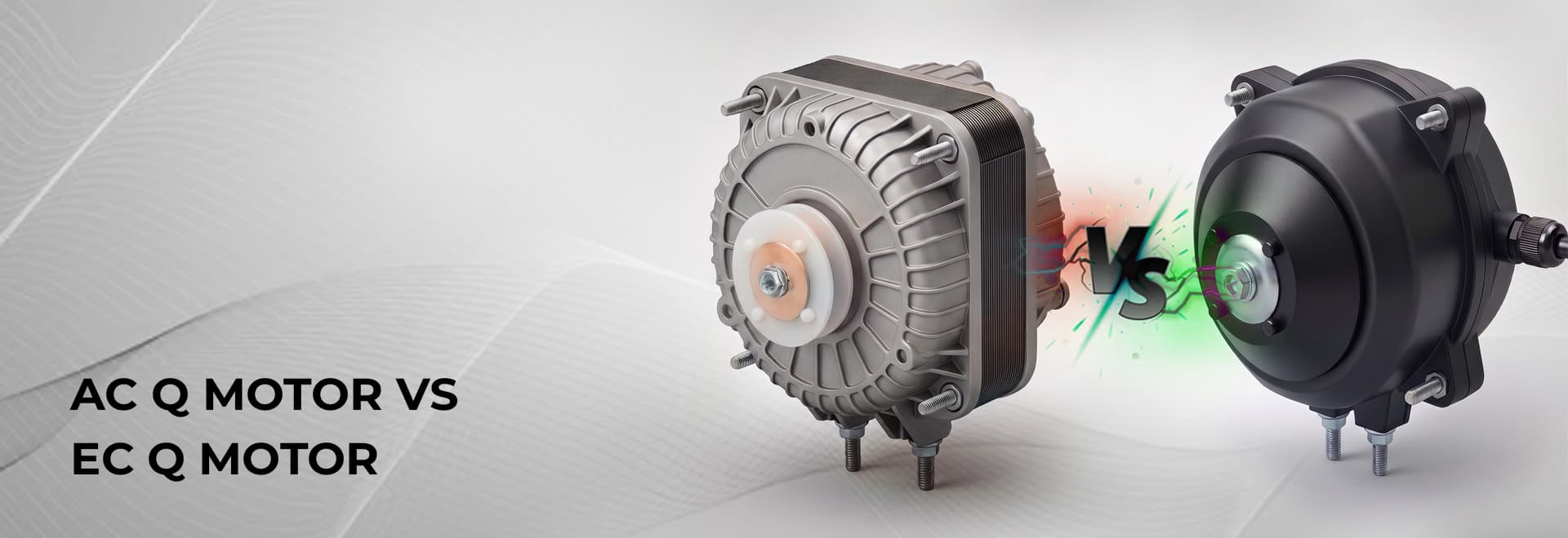
If you've looked at the spec sheets for an AC shaded pole motor and an EC motor side by side, one number jumps out immediately: the EC motor draws far less power for the same shaft output. But spec sheets don't explain why, and understanding the why is what separates a good motor selection from a guessed one.
This post covers the engineering reason behind the efficiency gap between the trumaxx AC Q MOTOR (AC Shaded Pole Motor) and the trumaxx EC Q MOTOR (EC Motor), and what that gap actually means at the system level.
The AC shaded pole motor is one of the simplest AC motors ever designed. A short-circuited copper ring, the shading coil, sits over a portion of each stator pole. When AC voltage is applied, the shading coil creates a phase-displaced magnetic flux that spins the rotor. That simplicity comes at an efficiency cost, and it comes from three places:
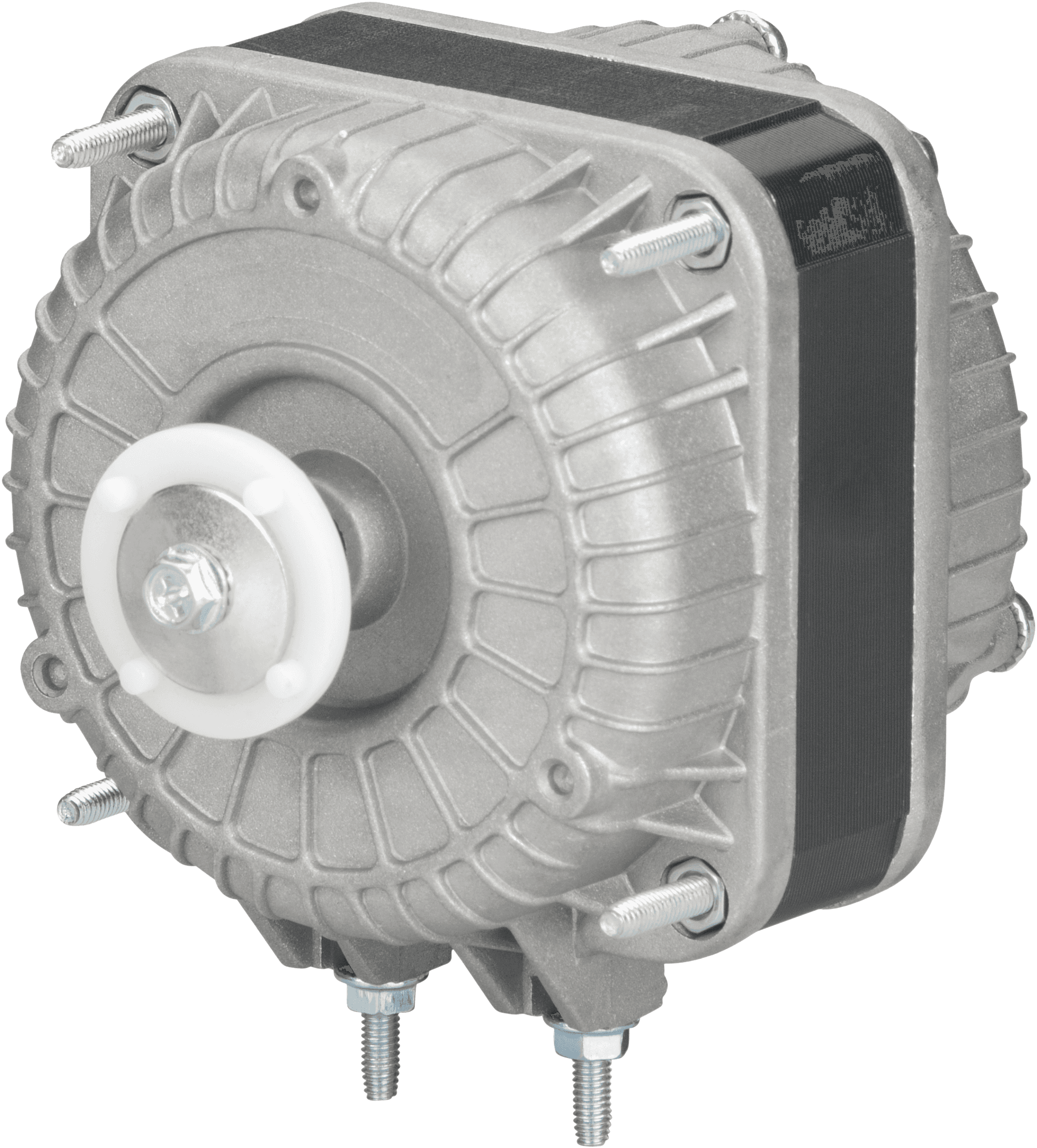
The cumulative effect: from trumaxx's own spec sheet data, a SAFE-AC-10 AC Q MOTOR draws 40 W from the supply to deliver 10 W at the shaft, an efficiency of 25%. The remaining 30 W becomes heat.
The EC Q MOTOR uses a brushless permanent magnet (BLPM) rotor with an integrated electronic drive. The drive rectifies mains AC to DC, then synthesises a variable-frequency AC waveform to energise the stator. The commutation timing is controlled electronically, not magnetically.
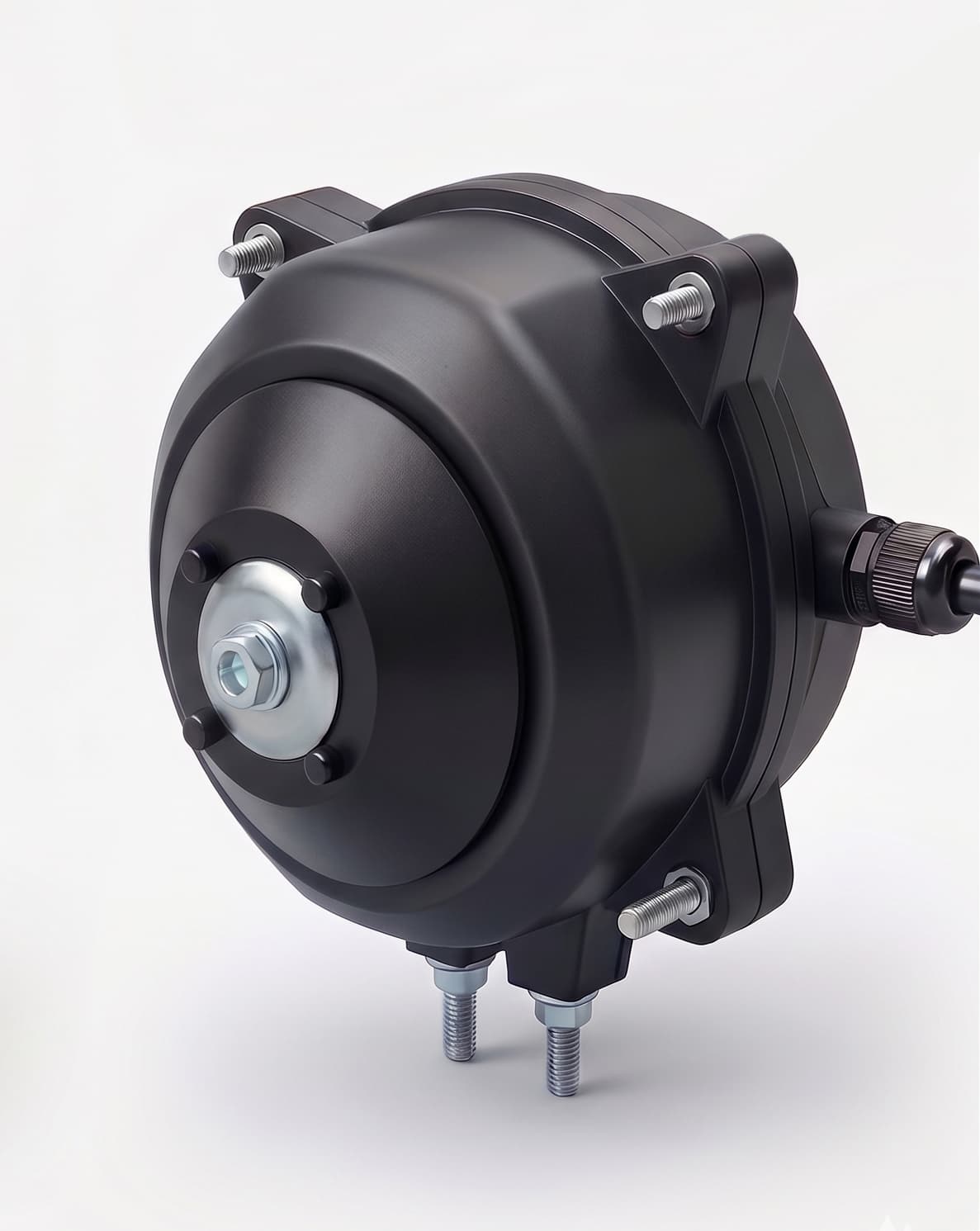
This architecture eliminates the three loss mechanisms above:
The result: the trumaxx SAFE NEC-4810 EC Q MOTOR draws 15 W to deliver 10 W at the shaft, an efficiency of 66.7%, with rated peak efficiency reaching 70%.
Same 10 W of shaft output. One-third of the input power.
In a fixed-speed application, say an evaporator fan in a commercial cold room, the motor runs continuously. The input power is the number that matters for operating cost.
At a comparable 10 W shaft output:
| Parameter | AC Q MOTOR (SAFE-AC-10) | EC Q MOTOR (SAFE NEC-4810) |
|---|---|---|
| Input power | 40 W | 15 W |
| Annual consumption (8,760 hrs) | 350 kWh | 131 kWh |
| Annual saving per motor | - | 219 kWh |
The AC Q MOTOR runs at a fixed 1,300 r/min regardless of thermal demand. The EC Q MOTOR operates across 300 to 1,800 r/min. At reduced speed, power consumption drops, and in systems with variable load, that drop compounds the efficiency advantage significantly.
Because efficiency is not the only engineering variable. The AC Q MOTOR carries a lower unit cost, requires no external drive electronics, and publishes a certified IP42 ingress protection rating. For short-duty, budget-constrained, or simple on/off applications where total operating hours are low, the energy cost saving does not justify the unit cost premium. The correct motor depends on the duty cycle.
Yes. The trumaxx SAFE NEC series accepts 100-240 V, 50/60 Hz. The integrated drive handles input rectification and regulation. It operates on Indian single-phase supply without modification and is equally compatible with 110 V markets for export OEM applications.
At 1,300 r/min, the fixed operating speed of the AC Q MOTOR, the EC Q MOTOR is compatible with the same blade diameter range. However, physical mounting dimensions differ between the two motor types. Bracket and bore dimensions must be verified before retrofitting. Contact the trumaxx team for retrofit guidance specific to your existing installation.
The efficiency gap between an AC Q MOTOR and an EC Q MOTOR is not incremental. It is structural. The shading coil topology inherently sacrifices input power to generate torque asymmetry. The EC topology eliminates those losses at the electromechanical level. The spec sheet numbers are the downstream evidence of that architectural difference.
For applications where duty cycle is long and energy cost matters, the engineering case for the EC Q MOTOR is settled in the data.
At trumaxx, we help OEMs and system designers compare motor options based on duty cycle, energy cost, operating condition, and actual system performance. If you are evaluating AC Q MOTOR and EC Q MOTOR options, our team can help you choose with confidence.
Get in touch with trumaxxCopyright © 2024 Safe Refrigerations (P) Ltd. | Privacy Policy | Terms & Condition