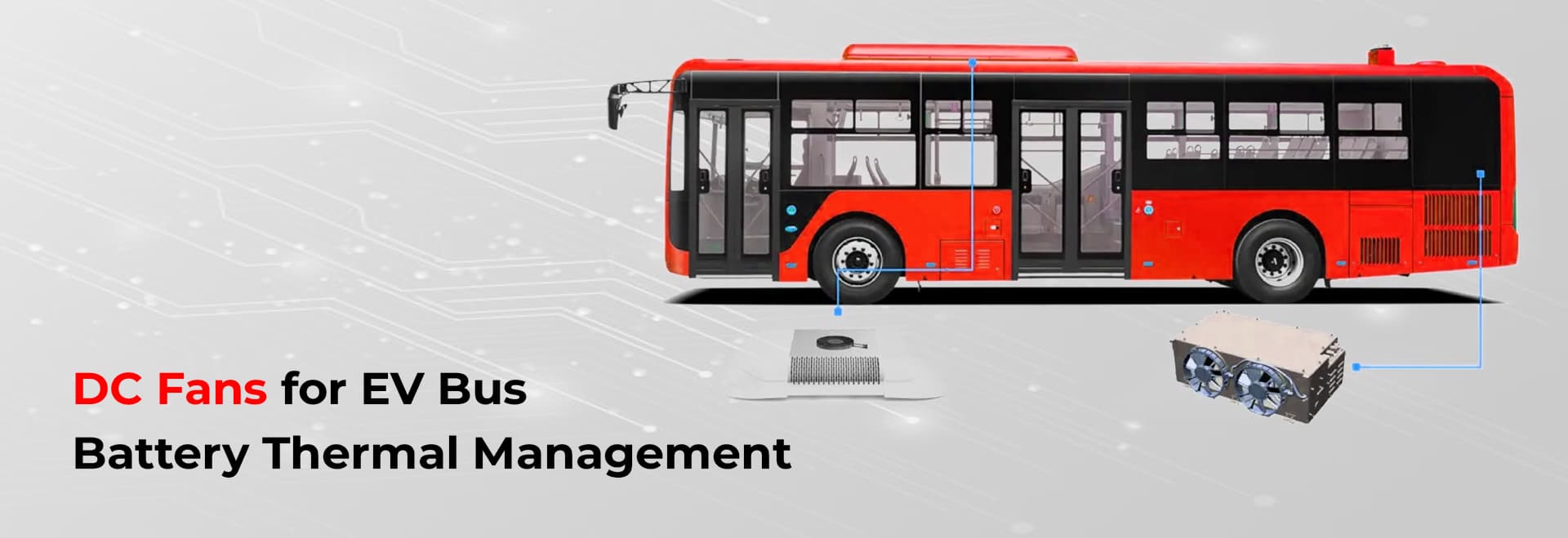
India's EV bus fleet is growing fast, and every bus on the road carries a battery pack that demands precise temperature control. A battery running too hot loses capacity, ages faster, and in worst cases, becomes a safety risk. A battery running too cold delivers reduced power and reduced range.
The component that keeps batteries in the optimal thermal window quietly, continuously, and efficiently is a precision-engineered DC cooling fan.
This article explains why standard fans fail in BTMS applications, what trumaxx has engineered specifically for Indian EV buses, and what technical specifications you should demand before specifying any fan for a battery thermal management system.
Lithium-ion battery cells, the dominant chemistry in Indian EV buses, operate efficiently within a narrow temperature band. A commonly cited optimal range is 15°C to 35°C. Outside that window, performance, safety, and pack life begin to suffer.
For an EV bus in India, operating in ambient temperatures that routinely exceed 40°C in summer and in stop-start urban cycles that generate sustained heat, passive cooling is simply not viable at the battery capacities involved.
Poor thermal management does not just shorten battery life. It degrades daily operational performance.
| Thermal Condition | Observed Impact |
|---|---|
| Sustained overtemperature | Up to 20% capacity loss per 100 charge cycles |
| Peak-load heat spikes | Instantaneous power derating by BMS |
| Poor heat distribution | Premature failure of individual cells within the pack |
| Insufficient airflow at high ambient temperature | Reduced regenerative braking efficiency |
For fleet operators, this means shorter routes per charge, earlier battery replacement cycles, and higher per-km operating costs. For OEMs, it means warranty claims and reputation risk.
Effective BTMS is not a cost centre. It is a range and lifetime multiplier.
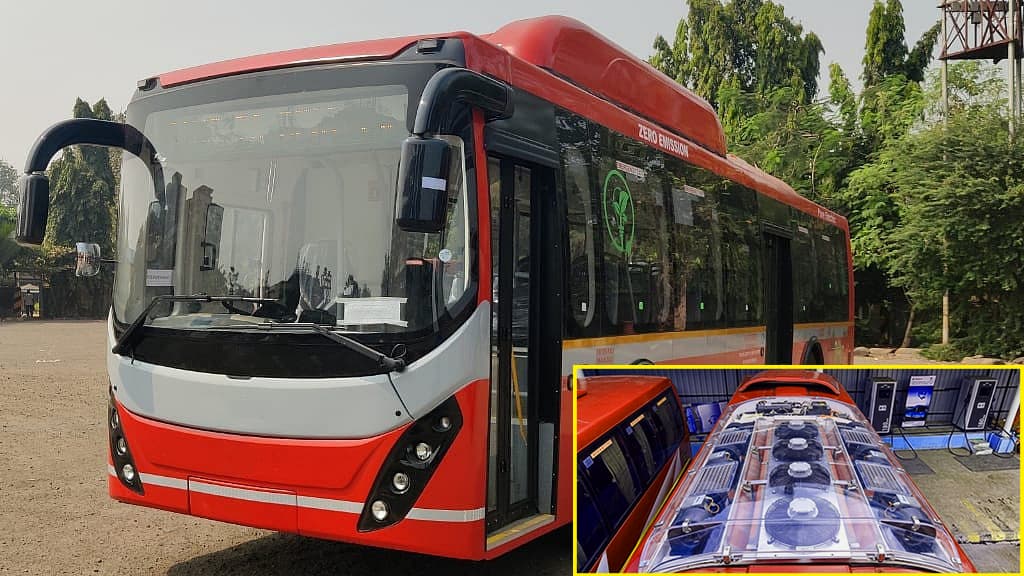
Engineers specifying fans for BTMS sometimes reach for off-the-shelf industrial or HVAC fans because they are familiar and readily available. This is a costly specification error.
Standard AC industrial fans are designed for ambient air circulation. They are not engineered for the vibration environment of a moving vehicle, the ingress exposure of an underbody installation, or the variable-demand control architecture of a battery management system.
Specific failure modes include:
BTMS cooling fans must be designed ground-up for the automotive environment.
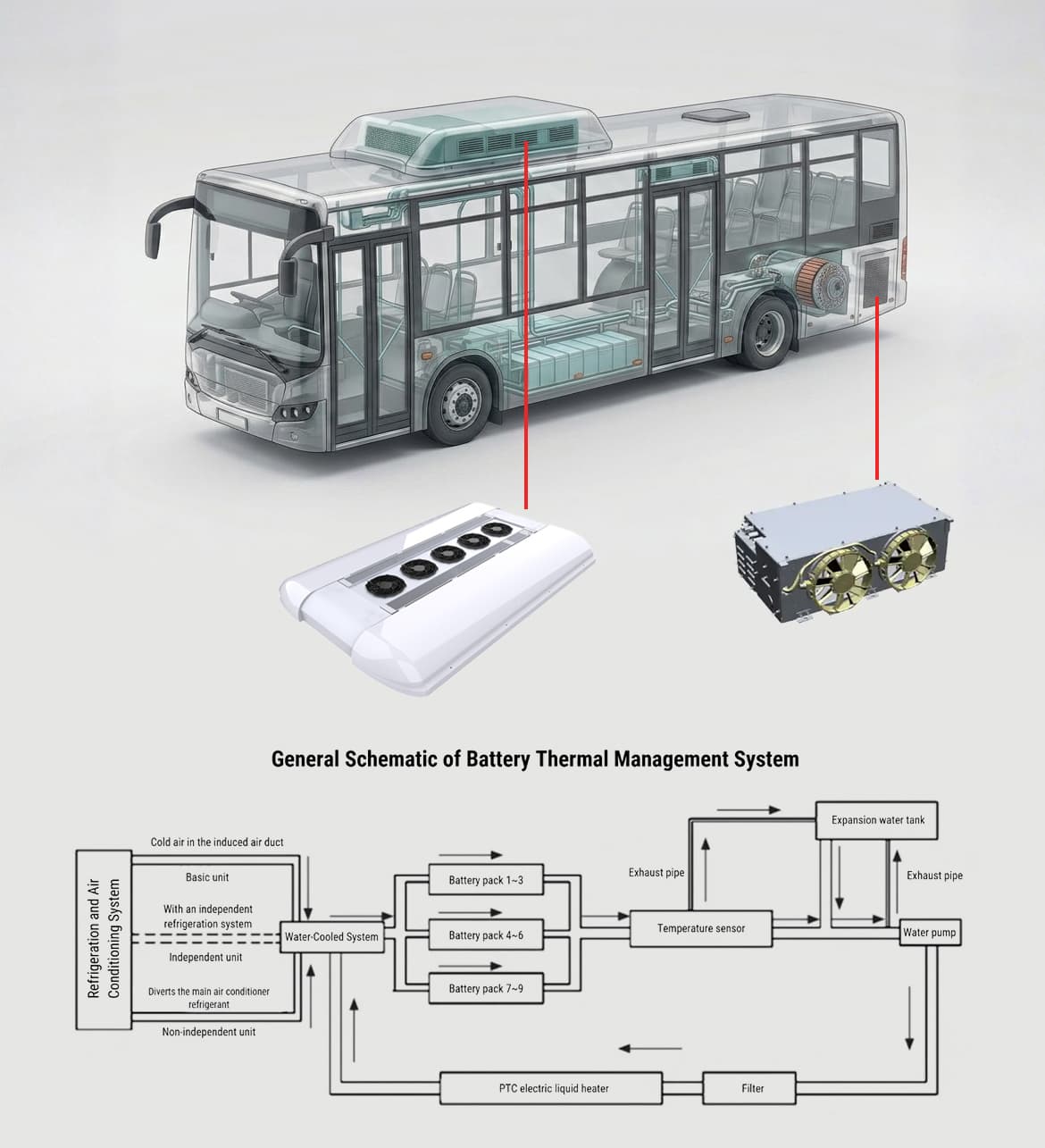
trumaxx has developed a brushless DC fan series, the SAFE-WSLNF series, engineered specifically for battery thermal management applications in electric vehicles. The design brief was simple: build a fan that the BMS can control precisely, that survives the Indian road environment, and that does not become a maintenance item.
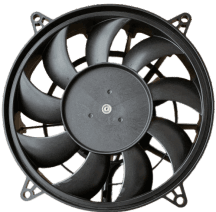
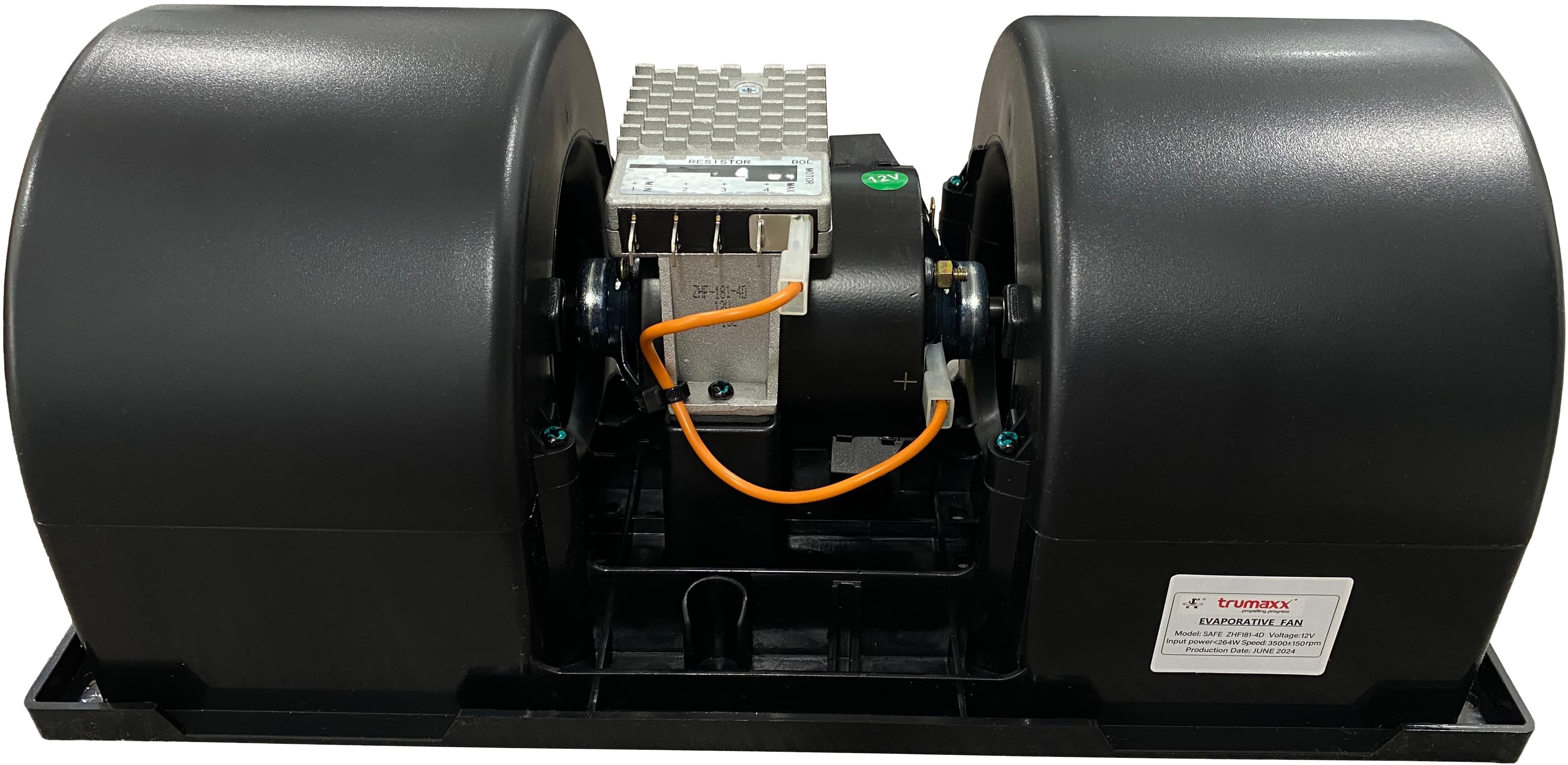
The trumaxx BTMS fan series is rated IP68, the highest ingress protection classification for both dust and liquid.
For an EV bus, this matters in specific scenarios that are routine in Indian operations:
A fan that fails due to ingress in year two of a bus's service life is an unacceptable failure mode. IP68 eliminates this category of risk.
The most important control feature in a BTMS fan is not maximum airflow. It is precise variable airflow. Battery cells generate heat proportional to current draw. During acceleration, regenerative braking, and fast charging, heat generation is at its peak. During steady-state cruising at moderate speed, the thermal load is much lower.
An intelligent BTMS runs a feedback loop:
trumaxx BTMS fans support PWM speed control, accepting a standard PWM control signal from the BMS to vary RPM continuously across the operating range. Benefits include:
The SAFE-WSLNF series uses brushless DC motor technology. This is the correct engineering choice for automotive applications. Brushed DC motors use carbon brushes to transfer current to the rotating commutator. Those brushes wear. In a fleet bus running 16+ hours per day, brush replacement intervals become a scheduled maintenance item, with associated downtime and labour cost.
Brushless motors eliminate this entirely:
For a fleet operator with 100+ buses, the maintenance cost difference across a 10-year asset life is significant.
India's EV bus ecosystem has specific infrastructure characteristics that trumaxx has designed to address.
When specifying a BTMS cooling fan, engineers should work through the following parameters in sequence.
| Parameter | What to Check |
|---|---|
| Required airflow | CFM or CMH, determined by battery heat generation rate, target temperature differential, and airflow path resistance. |
| Available static pressure | The resistance of the battery pack airflow path, including ducting, filters, and pack geometry. |
| DC supply voltage | Match the fan to the auxiliary bus voltage, such as 24V, 48V, or custom requirements. |
| Control interface | Confirm PWM frequency and duty cycle range compatibility with the BMS. |
| IP rating requirement | IP68 for underbody or exposed installations; IP65 minimum for enclosed battery compartments. |
| Size constraints | Installation envelope dictates fan diameter. trumaxx DC fans are available from 60 mm to 355 mm. |
trumaxx BTMS-series brushless DC fans (SAFE-WSLNF) are available in multiple frame sizes to fit the range of EV battery pack formats used in Indian buses, from small urban shuttle platforms to full-size city bus configurations.
For specific airflow curves, static pressure data, PWM control parameters, and mounting dimensions, contact trumaxx's technical team with your application brief.
India's EV bus market is scaling rapidly, and fleet operators and OEMs are increasingly scrutinising total cost of ownership beyond the sticker price of the vehicle. Battery longevity, uptime, and range consistency over the asset's operational life are the numbers that matter.
The cooling fan in a BTMS is a small component with an outsized influence on all three of those outcomes. Specifying a fan that is engineered for the automotive environment, IP68 sealed, PWM-controlled, brushless, and validated for Indian operating conditions, is a straightforward way to protect battery investment and operational reliability.
trumaxx has built that fan. If you are designing or procuring for an EV bus BTMS application, talk to the trumaxx technical team.
A BTMS is the subsystem in an electric vehicle responsible for maintaining the battery pack within its optimal operating temperature range. Lithium-ion batteries generate significant heat during charging and discharging, and uncontrolled temperature rise leads to capacity loss, accelerated aging, and in extreme cases, thermal runaway. Dedicated BTMS fans are engineered for the automotive environment with IP68 ingress protection, PWM speed control, and brushless motor technology, unlike standard industrial fans that are designed for fixed-speed, static-mount applications.
For battery compartments with any exposure to road splash, moisture, or high-pressure cleaning, IP68 is the recommended minimum. IP68 confirms complete dust exclusion and protection against continuous immersion, the most demanding ingress protection level. For fully sealed, interior-only battery compartments with no external exposure, IP65 may be acceptable, but IP68 provides a stronger long-term reliability guarantee.
Fan power consumption scales with the cube of rotational speed, according to the fan affinity laws. A fan running at 70% of its maximum RPM uses approximately 34% of the power it would consume at 100% RPM. PWM control allows the Battery Management System to adjust fan speed in real time based on actual cell temperature, so the fan only consumes the energy necessary for the current thermal load.
trumaxx DC fans are available in variants compatible with the 24V and 48V auxiliary bus architectures common in Indian EV buses. For applications with non-standard voltage requirements, contact the trumaxx technical team with your specification.
The correct specification process starts with a thermal model of your battery pack: calculate the heat generation rate at maximum charge and discharge, determine the target temperature differential, map the airflow path resistance, and derive required airflow and static pressure. trumaxx's technical team can assist with fan selection once these parameters are defined. Available frame sizes range from 60 mm to 355 mm.
Yes. trumaxx DC fans are also used for condenser cooling in EV bus HVAC systems and for motor cooling in electric drivetrains. The brushed SAFE-LNF series and brushless SAFE-WSLNF series together cover a range of EV thermal management applications.
At trumaxx, we work with OEMs and system designers to select DC fans for real operating conditions, including airflow, static pressure, voltage architecture, PWM control, ingress exposure, and Indian road environments.
Get in touch with trumaxxCopyright © 2024 Safe Refrigerations (P) Ltd. | Privacy Policy | Terms & Condition